“Elisha replied to her, “How can I help you? Tell me, what do you have in your house?”
“Your servant has nothing there at all,” she said, “except a small jar of olive oil.”” (2 Kings 4:2).
What do you have in your house right now? What valuable items might you possess? Will “oil” be the first thing coming to your mind? Do you have at least a small jar of oil in your pantry? Very likely, you can find more than one kind of oil. If we count the solidified oil, you may have even more choices. Technically, the solid form of oil at room temperature is also called fat. For the sake of brevity, I will try to focus on the liquid form of lipid for this post, which is often referred to as “oil”.
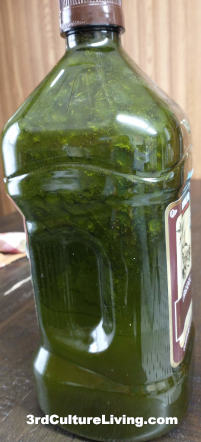
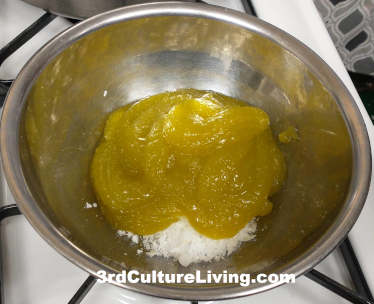
As it turns out, if “room temperature” in the kitchen gets cold enough Olive Oil will also solidify. You can rest easy knowing that you are saving on your heating bill. :o)
During Biblical times, oil had many uses: cooking, lighting, anointing, etc.. Oil has been a valuable commodity throughout human civilization and various traditions. Oil is relatively shelf stable and can be stored for a long period of time. Most kitchens always have oil available. Oil is essential for daily scratch cooking or skin care. Oil can also be used as a carrier to infuse other medicinal or fragrant herbs to enrich our lives. You probably have your personal encounters and fond memories with different kinds of oils.
For thousands of years, people all around the world used both oils and fats for cooking, and many other purposes. To show hospitality and respect in some ancient customs, the host would anoint the special guests’ heads with oil before they dined together. Shepherds used oil to treat and protect the sheep’s wounds and keep insects away from their heads. Do you wish you could have a bottle of the cure-all medicinal potion Lucy had in Narnia? I know I do. Maybe that’s why I am so intrigued to dig deeper into all the wonders of essential oils for holistic healing for both humans and animals. :-) The more I learn, the more I feel I need to learn.
It’s safe to say we tend to associate oil with a positive feeling, like soothing, healing, nourishing, and satisfying. We have a need and desire for good oils. No wonder that the prophet Elisha had confidence the widow could sell all the oil to not only pay off her debt, so her sons would not need to be taken by the creditor as slaves, but also to have extra to live on. To this widow, the small jar of oil is life-saving and life-giving! I seriously doubt the widow saved the small jar of oil for cooking. Her deceased husband revered the Lord. My guess is that the widow kept the oil by faith for anointing or religious practices, since oil symbolizes God’s holy presence.
I like how the widow involved her children to follow Elisha’s instructions. Her children obeyed without questioning or delaying! By faith, she and her boys offered the only valuable item of the house, then borrowed not just a few empty jars from neighbors. They did just as the prophet Elisha had asked, poured oil from the only small jar of oil and filled all the jars with oil! What a miracle! What a provision and turnaround in a desperate situation! A life crisis had been turned into an unforgettable faith boosting testimony! God’s people experience God’s presence in new ways in times of trouble, when they put their trust in the all-powerful God!
That being said, let’s get back to the discussions of the modern application of oil. As we receive and reflect on the blessings of oil, it is important for us to know what oil is.
With the 3rd Culture perspective, we strive to not just follow our assumptions. Just like food or milk can mean very different things for the modern diet, “oil” can be totally different from what we think it is.
Oil is a key ingredient in our daily food consumption, so it makes sense the industrial revolution has been working on speeding up the heating process to extract more oil from seeds and plants. This process is totally different from traditional extraction. Using the cold press is much more gentle. It is now much more convenient and abundant to produce vegetable oil, however, the high heat in the process not only destroys the nutrition, but also makes the oil toxic!
Good oil has traditionally been used sparingly for special purposes. As a child growing up in China, I remember being told to only use a few drops of sesame oil at the end of cooking. We do this to preserve the delicacy of the high quality, more expensive oil and to be more economical. This practice is still true today for Chinese cooking. However, I never thought of the chemical reactions that could happen when a certain type of oil is heated when I was a child. In our journey of seeking clean food and products, we have long overlooked the harm of bad oils.
In our kitchen, we have coconut oil, olive oil, and sesame oil in the cupboard, and homemade butter from our cow milk in the fridge. I use olive oil for salad, sesame oil for a final Asian touch not for cooking, coconut oil and butter for cooking. I also often use olive oil to make sourdough bread, since it is easier to pour and mix. Coconut oil and olive oil can stand high heat, especially coconut oil. Coconut oil melts in the hot summer, and is much easier to use than its solidified form. I didn’t think too much about oils and took the good oils we use for granted. I knew those oils are good and didn’t worry too much about the bad vegetable oils when we would eat out or buy occasional packaged “healthy” treats. I tried to avoid the not-so-good oils at home and thought it was enough. “Vegetable” oil sounds so harmless, doesn’t it?
The enemy is pretty sneaky to use something good and twist it. The bad and cheap oils have penetrated into our daily diet. Little by little, they can steal our health, money and even life!
It was not until recently, my eyes have been opened about the great harm those cheap oils can do to us. Physician and biochemist Catherine Shanahan, M.D., in her book “Deep Nutrition” states, “When you worry about chemicals hidden in modern food, you might first think of monosodium glutamate (MSG), pesticide residues, and contaminants, like mercury. But compared to bad fats, those are small potatoes.” She further explains how vegetable oil is your brain’s worst enemy!
I realized my ignorance about the depth of damage that could be caused by bad oils. Dr. Shanahan places vegetable oil and sugar before all others, on the very top of her don’t eat list. Now that I know, I need to repent and elminate more formerly acceptable treats. You may be surprised to see how often vegetable oil/canola oil/sunflower oil can sneak into healthy brands of granola, energy bars, and cereals, etc.. We already rarely go out to eat, and knowing most resuturants use vegetable oils gives us another confirmation of the advantages of home cooked meals!
On the other hand, I am happily surprised to see more resturants are on a mission to refuse to use bad oils! Also, there are more and more healthier options in the market. I am grateful to have learned that children’s snacks at a Bible study class my daughter is enrolled in this year will be veggie straws, made with avocado oil and sea salt. I am very thankful and appreciative of the efforts by the leaders who care about children’s spiritual and physical health. Apparently, a movement to reject cheap industrial seed oil has been going on for quite a while.
At least now I know the cheap vegetable oil is not good for eating at all! Manufacturers like to use those industrial oils not only because they are cheap, but also because they can be used as preservatives without labeling any preservatives on the ingredient list. You might want to use the cheap oils to grease the hinges or make play dough, just not for human consumption. Yes, it is that bad. It ruins your Non-GMO treats and good food you cook with them. It’s like you can use Coca-Cola to clean rust but not for drinking. You wouldn’t want to drink or eat the greasing oil, rust cleaner, would you?
It’s truly amazing God has made our human bodies to be able to take so many toxins, and not die! Even more amazing is that our bodies can usually heal and recover after the right choices are being made for a reasonable period of time. Even our DNA can be altered! Other species don’t usually have such luxurious flexibility!
Well, I am not a doctor or a chemist. You are more than welcome to do some further reading and research on your own (see “Further reading” at the end). Understanding the process of how bad oils destroy our health fuels my passion to share the truth with people who have ears to hear. Together with my husband, we are on a mission to pass on a simple abundant legacy to our children for God’s glory, by God’s grace, one day at a time, or one home cooked meal at a time. I made tons of mistakes in this parenting journey but His grace is sufficient.
Just like the widow offered her very best small jar of oil for God’s use, I pray my small pocket of time to record and share what the Lord taught me in my mundane daily living, will be used and multiplied by God for His glorious use through faith. I am grateful my faith has been strengthened as the Holy Spirit works in my heart and mind when I reflect, repent and record through writing. Hopefully, whoever, including my children, reads the blog will be encouraged or inspired in some way.
Lastly, I want to ask again “what do you have in your house”? Do you have good oil or bad oil? Perhaps, as you make holiday meal plans, one simple change of using good oil can go a long way. Satistically, heart attack risks spike over the holiday season. More importantly, are you anointed by the Holy Spirit, which is often symbolized by oil, (of course the good kind of oil)? If so, what would you like to offer by faith even if it is just a small jar of oil? If not, today is the day to receive the gift of the Holy Spirit as you put your trust in Jesus Christ as your Lord!
The bad oil may kill you over time, and the good oil may bless you with a longer good life on earth. Compared to eternity, however, only the anointing of the Holy Spirit really counts! The story recorded in 2 Kings about the widow and the prophet, from the Holy Bible, is a true story, not just an interesting fairy tale. As the Holy Spirit dwells in your heart, He will set you free from the bondage of sin and death. He will sanctify every aspect of your life and give you life to the full! The overflow of the miraculous work of the Holy Spirit is real and powerful then and today!
What is the most precious possession you own? Will it last forever? Does it give you unending and growing joy? Will people around you be blessed because you own this precious item?
As a Jesus-follower, by faith we know the Holy Spirit is dwelling inside of us. Jesus Christ, the Messiah, the Anointed One, is chosen to die for our sins! When we trust Jesus as our Lord, we are anointed by the Holy Spirit. Thus, we are chosen, set apart, and loved by God through Jesus!
By faith my body has become the temple of the Holy Spirit, which is the very reason we desire to keep it clean with the best of our knowledge to honor and serve God. We are cleansed and blessed for our own good as we follow His lead day by day. His name is glorified in His mighty redeeming work through our brokenness and mistakes, and by our redeemed life choices.
As we enjoy the gift of good oil, may our faith be strengthened by our loving Father’s abundant provision and real presence! He will anoint His chosen people with the oil of joy and gladness! We will praise Him for the good oil made from a variety of living things He has created. We will praise Him ever more for the eternal pleasure in His presence! Even in the presence of our enemies, like David, we as His chosen people, will enjoy a feast He has prepared. Our cup of joy will overflow because of His blessings upon us despite whatever we might face on earth!
My friend, are you ready to be anointed by the Anointed One? How many empty jars do you have to become the vessels to receive His pouring of blessings?
Further Reading:
- 2 Kings 4: 1-7 Prayerfully consider your small jar of oil to offer for His use.
- Psalm 23
- Deep Nutrition: Why Your Genes Need Traditional Food by Catherine Shanahan M.D.. Her research and analysis about human diet are well explained and illustrated. However, I do want to remind you to use your discernment when reading about the evolutionary-influenced research results and viewpoints.
Note about the pictures: Elyse wrote the article. Robert picked the pictures and captions… Hey, its about oil, what pictures would you include? Leave thoughts in the comments. :o)


