“Consider the ravens: They do not sow or reap, they have no storeroom or barn; yet God feeds them. And how much more valuable you are than birds!” (Luke 12:24)
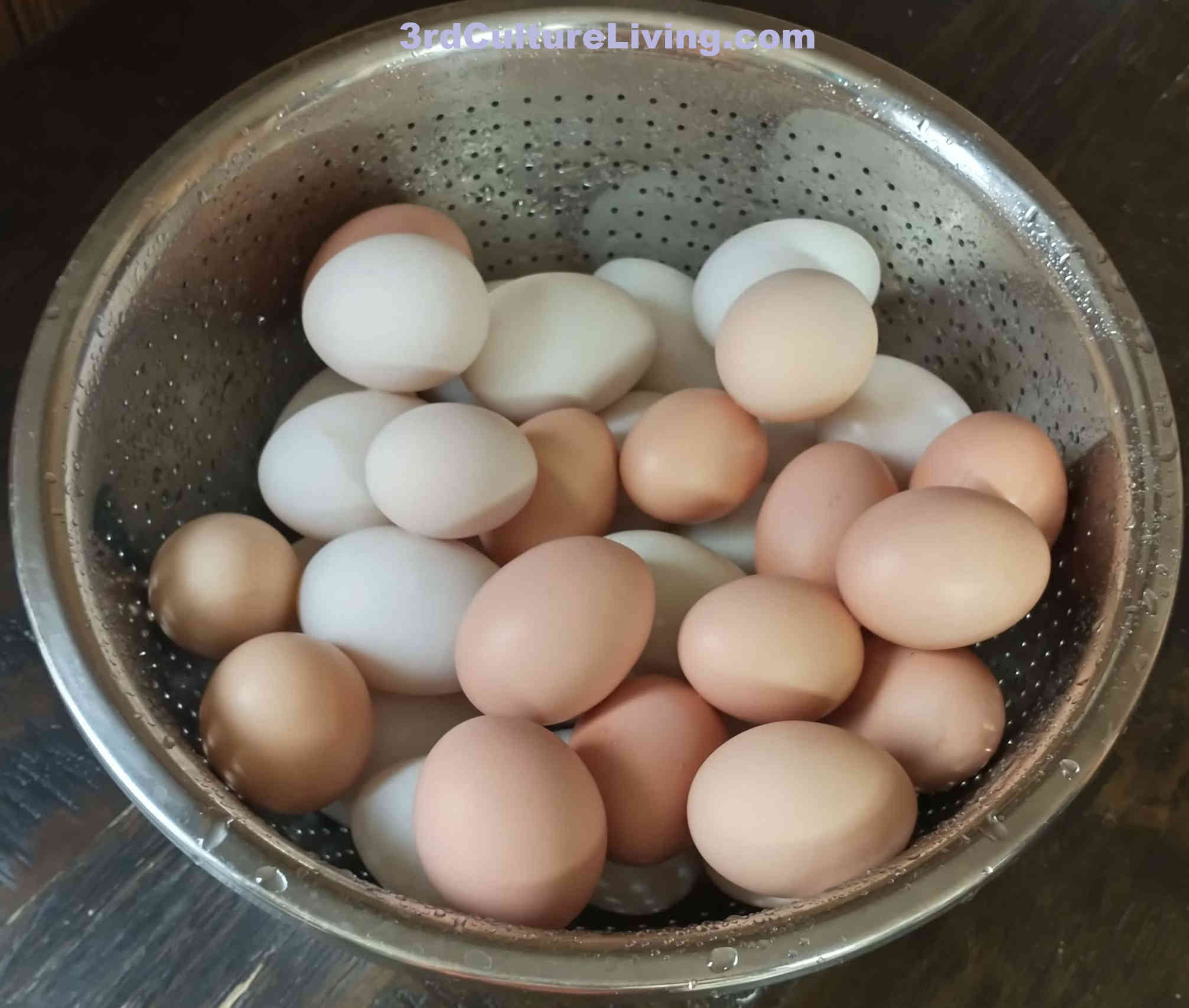
After reflecting on the egg-education, I am prompted to write down a few more thoughts about the excellent egg and share some simple ways to prepare eggs for family use. I am hoping to use those ideas and principles for my boys as they learn to cook. Eggs are so versatile, high in protein, easy to make. When I was young, the first dishes I learned to cook all involved eggs. I never heard of cholesterol issues with too much egg consumption back then. Well, back then, having too much food was not a concern for most people in a state dominated planned socialist economy. I remember the transition era when we could buy as much as we could afford without the need for any coupon. The coupons were issued by the government and distributed to individual families for specific items, like oil, grain, cloth, etc.., to limit the amounts you were allowed to buy. It’s kind of like the coupons you receive from Costco to give some control of over-buying, leaving you a sense of scarcity.
Unlike the forced planned economy, or the false scarcity in an advertisement used to stimulate consumption, God’s economy is liberating and abundant. I am reminded daily what a privilege we have to be entrusted with the responsibility to raise our family on a small piece of land! Many wild animals and plants already made their home here before us, without any human help. How do we live in harmony with nature while taking care of our family and livestock? We are not to follow the fads or strive for short-term gains. There is a lot to think through from a permaculture perspective.
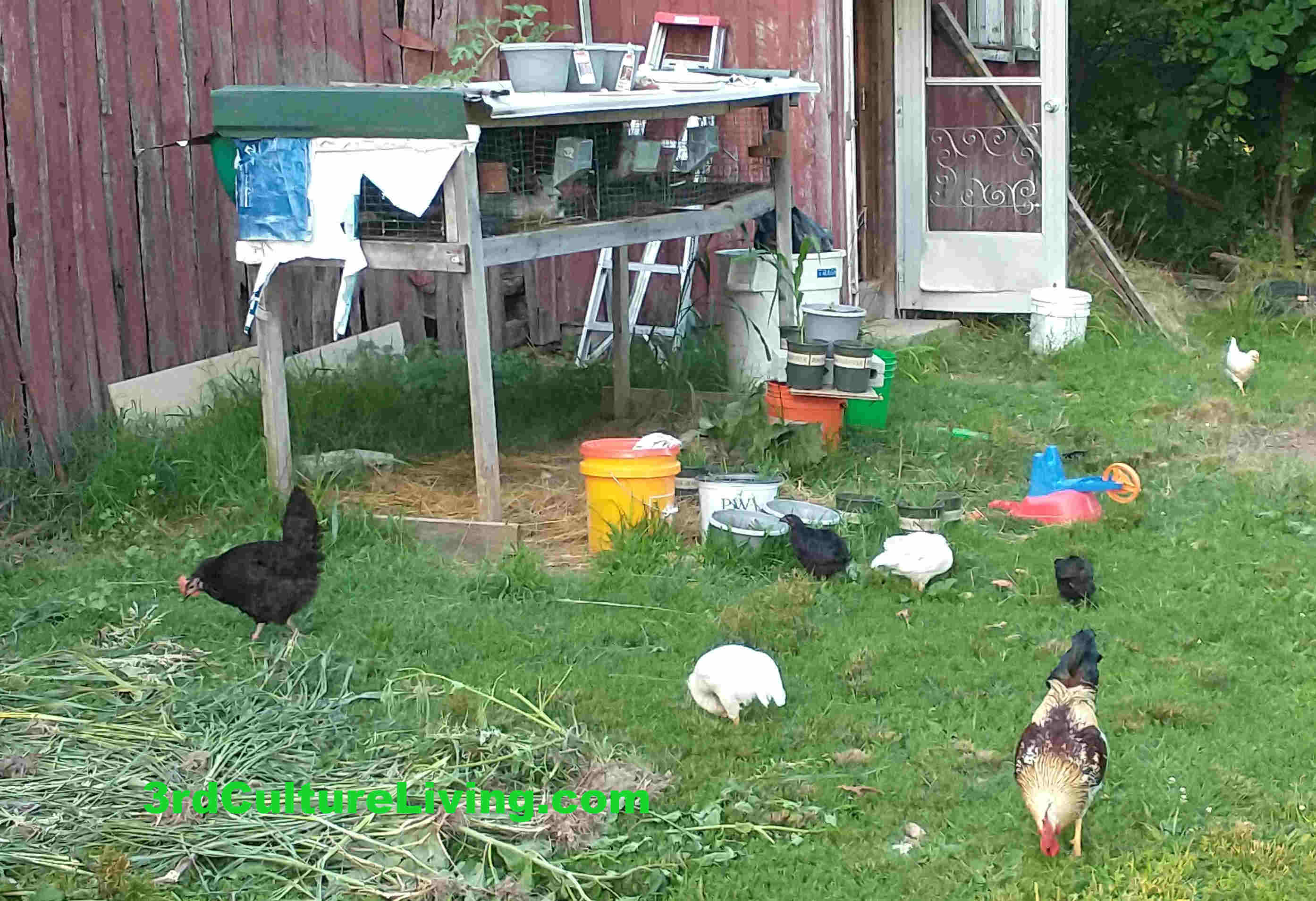
We enjoy watching our chickens and ducks just do their chicken or duck thing when they are freely roaming around pastures, or playing in the pond. The backyard eggs are way more nutritious than the store-bought ones! Their yolk color will tell you the difference. Our boys can taste the difference as well! As we take care of our loved ones, let us not underestimate the importance of the mundane task of food prep. It always blows my mind to think about how our Heavenly Father has chosen me, someone so disqualified or unequipped, to take care of my family. Feeding my family good food with love is a high calling. Is this a calling for you as well? If so, read on!


Just to take the pressure off. You don’t have to cook every meal. Don’t deprive other members of this privilege and responsibility. Everyone needs food. With the homestead abundance, the overflow of blessings will give us opportunities to bless others and to practice self-control. Without God’s help, the more we have, the more greedy we can become, which can be very dangerous for our souls. Homeschooling gives us a lot of freedom with education, while homesteading lifestyle is testing our fleshly weaknesses in a variety of ways. With God’s help, homeschooling and homesteading are powerful tools for home discipleship training. A lot of fun and theological discussions can happen in the kitchen while preparing food together.
As a shepherd to your children, you not only provide for them, but also need to learn to delegate, so they can be independently successful. While they are little, you provide everything for them. They don’t stay small for very long though. I am constantly learning and adjusting as my children grow, be it nap time, food amount, academic goals, or future plans, etc.. Even as I am writing this, I picture my teenage boy could be reading this soon or my baby girl could read this when she is a Mom even if I am not around on earth.
Nowadays, you can search on the Internet and find thousands, if not millions of egg recipes. No fear about not having a mentor around or not understanding the written recipes. The how-to instructions available also come with detailed pictures, videos and specific tips. Use those helpful resources and share what you have learned as well. I didn’t grow up with those opportunities. Back then in China, where I grew up, people who wrote the recipe books seemed to assume you had some basic knowledge or at least had someone near you to fill in gaps. The recipes were generally very short, mostly to give you the gist of the idea. Special recipes were treasured like a family secret passed down from generation to generation.
By contrast, people today are blessed to have access to ample recipes floating around, but, however, not too many people are actually in their beautifully equipped modern kitchen! Perhaps, some simple principles are worth sharing. I have no secret recipe to share, just a few common sense pointers to navigate the egg-cellent genre to get our thoughts going or hands busy.
First of all, know where your eggs are coming from. Not all eggs are made equal. Cheap low quality eggs can be really bad for you over time. That’s probably why the high cholesterol discussion comes with eggs in modern times. Though you don’t need to prepare your own food, it is always good to control the source of your foods. This principle is especially true for your family’s frequently used food items. Little things build up, good or bad.
#2 Do the float test. If the eggs are floating, they are not fresh. Too much air has crept into the shell over time. You want the eggs to sink to the bottom if you want fresh ones. You want really fresh eggs if you plan to hatch them with a higher hatching rate. However, if you collect your own eggs, you want to choose the older eggs to make boiled eggs. It will make your peeling job much faster. Don’t boil the freshly collected eggs if you can avoid it, unless you want to test your children’s patience and meticulous work! Put the boiled eggs into the icy cold water after you drain the batch of boiling hot water. This trick will usually make your peeling work like a breeze.
# 3 Looks and size don’t matter much. The standard size of commercial eggs can be scary! God has made each creature in their unique ways, including chickens and eggs, and YOU! Enjoy the different characteristics of different eggs. Don’t buy into the latest and newest things or ads. Use discernment when things look and sound good. Like avocados, bigger ones are not always better. Also, being open-minded to try different things gives us opportunities to reap new benefits or learning experiences. Do you know many ducks lay more eggs than chickens? Our ducks laid through the freezing cold winter. Duck eggs are not only bigger, but also have more vitamins and minerals than chicken eggs. Many chefs prefer to use duck eggs, including my boys!

#4 Have fun experimenting and exploring. I like to encourage my children to taste the original taste first, and then explore other ways to flavor or season them. If you know how to cook eggs in a variety of ways, you will know how to cook many other things. A lot of times, you don’t need the recipes, you just need to learn the techniques and cooking principles with lots of practice. If you hold true to your daily health habits, you don’t need to fret about being a purist when you go out. People are more important than food.
#5 Life is a balanced art. Stand firm to your basic principles even when challenged with a crowd. This is especially true for repeated events. Red dye is discouraged for allergy reasons for shared meals in public settings. How about other dyes? Use your common sense to have fun. Dye is dye. You can paint or draw with it but should not eat it. Just because you can eat something without a problem for the moment, it does not mean you should always do it. God has given our human bodies a lot of grace to recover from pollutants and toxic intake. Maybe you can try to use some natural coloring, like beet juice, turmeric, spinach juice to play with different colors.
#6 Yes, eggs can be fermented, pickled and preserved. They are delicious! For a long while, I was more hesitant to try to experiment with egg preservation. We bought expensive eggs and I was not motivated to play with them, in case things would go wrong. This spring, I am most excited to try to make some salted duck eggs. I grew up with them and have not had them for decades! We bought salted duck eggs once from an Asian market. It was a horrible tasting experience and I never bought it again! Another preserved egg is called “one-thousand-year eggs”. I don’t have everything I need to make them yet. Perhaps, a fun food project in the future. The principle is to avoid contamination when you start the prep, avoid the oxygen during the preservation/fermentation. During the fermentation, do your best to discourage the growth of bad bacteria and encourage the good bacteria. There are many ways to make the magic happen! With these principles different cultures, or even different families may have different practices. So much to learn!


# 7 Yes, eggs can be frozen for later use. You can freeze them raw or cooked. My son just made a big batch of scrambled eggs to freeze this week. If you freeze egg whites and egg yolks separately, you will need to add a pinch of salt or ½ tsp of sugar to every 4 yolks to help with preservation. This way the egg yolk will not change its texture when you thaw them. You don’t want to freeze boiled eggs though. You can, but the egg white will taste rubbery. Don’t freeze eggs with the shell. We have collected some frozen eggs with cracked egg shells in the cold winter! My favorite container for freezing raw eggs is our silicone cupcake mold. They pop out easily. But you can use what you have. I used an ice cube tray, recycled plastic food-grade containers as well. Don’t allow perfection to get in the way. Do what you can to preserve your harvest.

# 8 Methods and techniques are more important than recipes. You can boil, pan fry, steam, scramble, or bake your eggs. You can cook them as a whole or separate the whites and yolks. You can mix eggs with other ingredients, to make cakes, breads, pancakes, quiche, egg drop soups, poached eggs, stir fries. You can add cooked eggs into your favorite dishes to give extra protein and flavor. The sky is your limit! You can also use egg crêpes to wrap other yummy leftovers to make something delightful! Once you get the rhythm, your repertoire of food prep choices will grow and expand. You can make connections with the ingredients you have with the time and opportunity you are given. You will have the confidence to cook without recipes or create your own unique family-favorite recipes.
# 9 If you know your source of the eggs and how the chickens are raised, even raw eggs are not as scary. You can play with the timing while cooking them. Boil, steam, or fry them for a shorter amount of time, your taste buds may thank you for a softer delight. My boys are always excited to discover the “perfect almost runny” yolk! What is your favorite texture?
# 10 If you don’t have a lot of eggs, you can stretch them by adding water, milk, soup, and leftovers. Chickens don’t always lay. Things happen. We need to learn to live in plenty and in want. Be content and creative with what we have. I didn’t grow up with an oven. One of my favorite things to make is the watered-down steamed egg with salt and oil. We had a lot of those yummy steamed eggs mixed with rice. Yum! Now, I do often use the toaster oven, saving only batch cooking for the big conventional oven. If you have extra milk and cheese, just add some leftover chopped veggies with your egg mix, a crustless quiche in the oven is not hard to put together! You can even make extra to give away or to freeze for later use if you have a lot of eggs now. Just be aware of your climate, humility, timing, and appliances available when you try something new. Test it with a small batch first and then move to batch cooking if you would like.
Last but not least, if you don’t know what to do with your old eggs, unhatched eggs, half-hatched eggs, you can always compost. Our neighbor likes to turn those eggs into dog food since they keep many dogs. I have seen people in the urban Chinese city put the egg shells in their potted plants as fertilizer. I have washed and saved the eggshells along with bones, and other scrap veggie pieces. When I accumulate a good amount of scraps in a reused frozen food bag, I will make a scrap stock in a slow cooker. The shell membranes (the thin skin inside the shell) and egg shells are good sources of collagen and calcium. Adding some vinegar to the scrap bone broth will help pull out more of the nutrients. Your joints and all the connective tissues will thank you! It’s virtually free and still way better than the store-bought stock! You can drink the stock with a pinch of real salt, or use the stock in other liquid-absorbing dishes, like pasta or rice. Plus, you can still compost or feed your birds the rest after the stock is strained. The eggshells will help the laying birds to have the calcium they need to produce more eggs!
If the birds are kept well, you don’t want to waste anything. Backyard birds are valuable. You and your family are even more valuable in our Father’s eyes. Know that you are never alone. The God Almighty always sees and knows. Do what you can. Pick up where you have left off. If you fall, just like you teach your children, dust it off, keep smiling, because the Father is pleased with who you are. He has not only chosen you but has called you to step out in faith to mother your children by His strength. All glory to the Father!
Further Reading: “Eggs” from the lunatic farmer, Joel Salatin, and prepare your mind for thinking. Where are your eggs from?

 3rd Culture Living