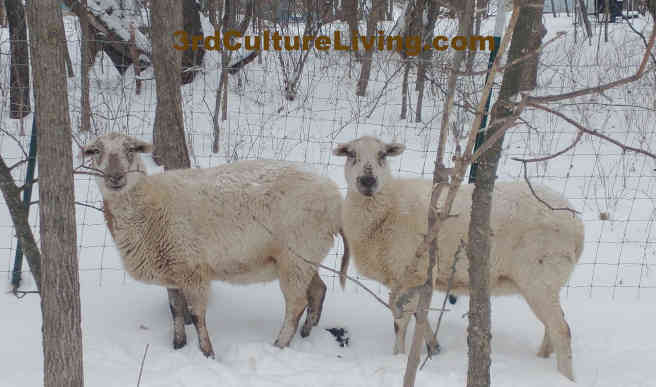
“I have strayed like a lost sheep (亡羊 / wáng yáng). Seek your servant, for I have not forgotten your commands.” – Psalm 119: 176
Ready for some word study? In particular, interested to dig into some Chinese characters? If not, feel free to pass on reading this post. However, if you are like me, you might find understanding one simple word can open up your mind for deeper truths. I was meditating on the last verse of the longest Psalm, and wrote some reflections on our lost sheep. I feel the need to start a different post related to some thoughts inspired by Chinese characters.
My favorite Bible to use is one of the first Bibles I had when I first became a believer in China as a college student. It was a Chinese & English bilingual Bible. I bought it from a local church. I was thrilled! It never occurred to me I could purchase a Bible so easily. If no one shared Christ with me, I would have no interest or access to the Bibles. I was a brand new believer in an atheist-mixed with Buddhist influence culture. My major for my bachelor degree was English education. A lot of my classmates were like me, with no knowledge about authentic Christianity.
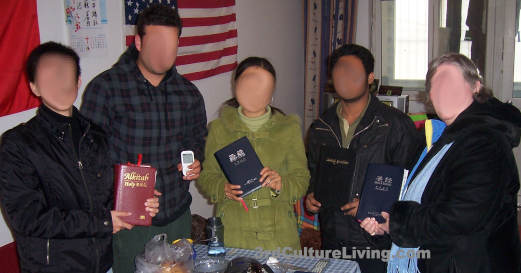
When my classmates knew I could buy a bilingual Bible, many requested to have one as well. Likewise, none of them had a Bible before, not to mention a bilingual one! They had no idea where to get a Bible either. I had the privilege to buy quite a few Bibles for my classmates. (Unfortunately, I have heard such Bilingual Bibles are no longer as easily available as they used to be in China. ) As English majors in China, we were actually encouraged by secular professors to read the Bible to get cultural understanding. Well, it is true that the Bible has an unimaginable influence on the western history and culture, this book is not like any other books. This book can read our hearts as we pick it up sincerely to seek the truth.
Back then, I was simply happy and grateful to hold a Bible in my hand. I was excited to use both translations to help me catch different insights. The Chinese translation is an older version, while the English is in NIV, a more modern translation by comparison. Later in my life, I was able to have access to even more translations of the Bible, including looking up the original words in Hebrew and Greek. I am so very grateful for the many Bible study tools and resources available to help us dig deeper into what the Scripture truly says.
Take the last verse from Psalm 119 for example, it caught my eye that the Chinese translation says “亡羊” (perishing/dying sheep), while the English translation says “lost sheep”. I realized that “亡羊” in Chinese can be generalized as “lost sheep”. There is a Chinese idiom, “亡羊补牢”, which means, if you lose your sheep because of broken fences, just fix it up. This idiom is used to encourage people to make it up when something is wrong or broken. It is never too late to try again and do better. Just don’t give it up. In this case, “亡羊” indicates that the lost sheep is gone or considered dead. However, the idiom is to encourage us to focus on what we can do to prevent more losses.
I was curious about what other translations would say and found most English translations use “lost sheep”. Then I looked up the word in Hebrew and found אָבַד (abad), which is used 184 times in the Old Testament, meaning destroy, perish, ruin for lives, nations, opportunities, etc.. After reading some of those verses using אָבַד (abad), I had a much more clear picture of the desperate situation the psalmist was trying to describe. It was a deep repentance, a warning, and an inspiration for all who can relate to this verse.
Back to the Chinese character in the title of this post, “亡” (death/dying), which leads me to a few other Chinese words with “亡” (death/dying) as a part. One is “忙 (busy)”, with “亡” on the right if you can spot it. On the left is a common radical meaning feelings, emotions, or anything related to our hearts. How interesting that people today take pride in getting themselves busy. It’s not hard to find people around staring at their electronic devices or talking on the phone while walking. How many times have I allowed myself and my family to forget about putting God first, by being preoccupied with another busy event or project?
Well, this leads to the next Chinese word, “盲 (blind)”. The busyness without eternal persepective over time will bring spiritual blindness. We don’t see heavenly things if we are only busy with earthly matters. We lose our vision and purpose in life. Without vision, we perish. We need sight! We need God’s supernatural intervention to give us the sight we don’t own naturally. We need God to open our spiritual eyes to navigate life against the mainstream.
What can we do then? The psalmist cried out, “Seek your servant, for I have not forgotten your commands”. That’s exactly how we can respond in our desperate situations! His precepts and commands are right and life-giving. What a joy! From His true word, we can see the truth, gain wisdom, and have a total reversal of our state. As a mother, we want our children to be physically safe, not forgetting to buckle their seat belts, or wear a helmet when biking. How much more should we pray for spiritual alertness to not forget to teach them about God and His word?
That being said, I will mention one last Chinese word, “忘 (forget)”. Did you see “亡(death/dying)“ on the top of the character? On the bottom is “心(heart)”. When we forget what is truly essential in our life, our hearts can be lifeless. Like the psalmist, we need God’s mercy each day to seek us, to illuminate His Word to our dull minds, to revive our hearts.
Indeed, without sovereign God’s intervention, we have all gone astray, like the perishing sheep or lost sheep. “All” means every single one of us. “אָבַד (abad)” is the helpless state of mankind without a Savior. He is the one who wills and acts. He is the One to give us desires to seek Him. He is the One who initiates love when we are lost. He is the One to provide the means and strength for us to continue to grow in Him. To God be the glory!
In this new year of 2026, I pray for the Lord to bless each one of us through His living and active word. He will graciously seek us, so we don’t get too busy (忙), or become spritually blind (盲). Instead, we will not forget (忘) his commands and take delight in following our good Shepherd! He has come for the lost and perishing! He has come to give life, abundant life in Christ! Do you know His voice? He is calling, right now!
Further reading:Read more about אָבַד (abad) here.

 3rd Culture Living