“There is a time for everything, and a season for every activity under the heavens:” Ecclesiastes 3:1
Having animals, and a house that is not well built for cold, gives some things to think about as it seems that we are heading into -10F tomorrow night.
Fortunately it’s Missouri, which means that there is a short winter (compared to Ohio) and the weather changes quickly and frequently. “If you don’t like the weather, just wait a few days.” is a common saying. We have recently been in the 50s, yesterday was in the 40s, today and tomorrow are in the single digits with -1 and -10 at night, and then we head quickly back into the 50s and even 60s (and then hopefully continuing on to spring and summer).
Here are some of what we have been doing to get ready for the cold:
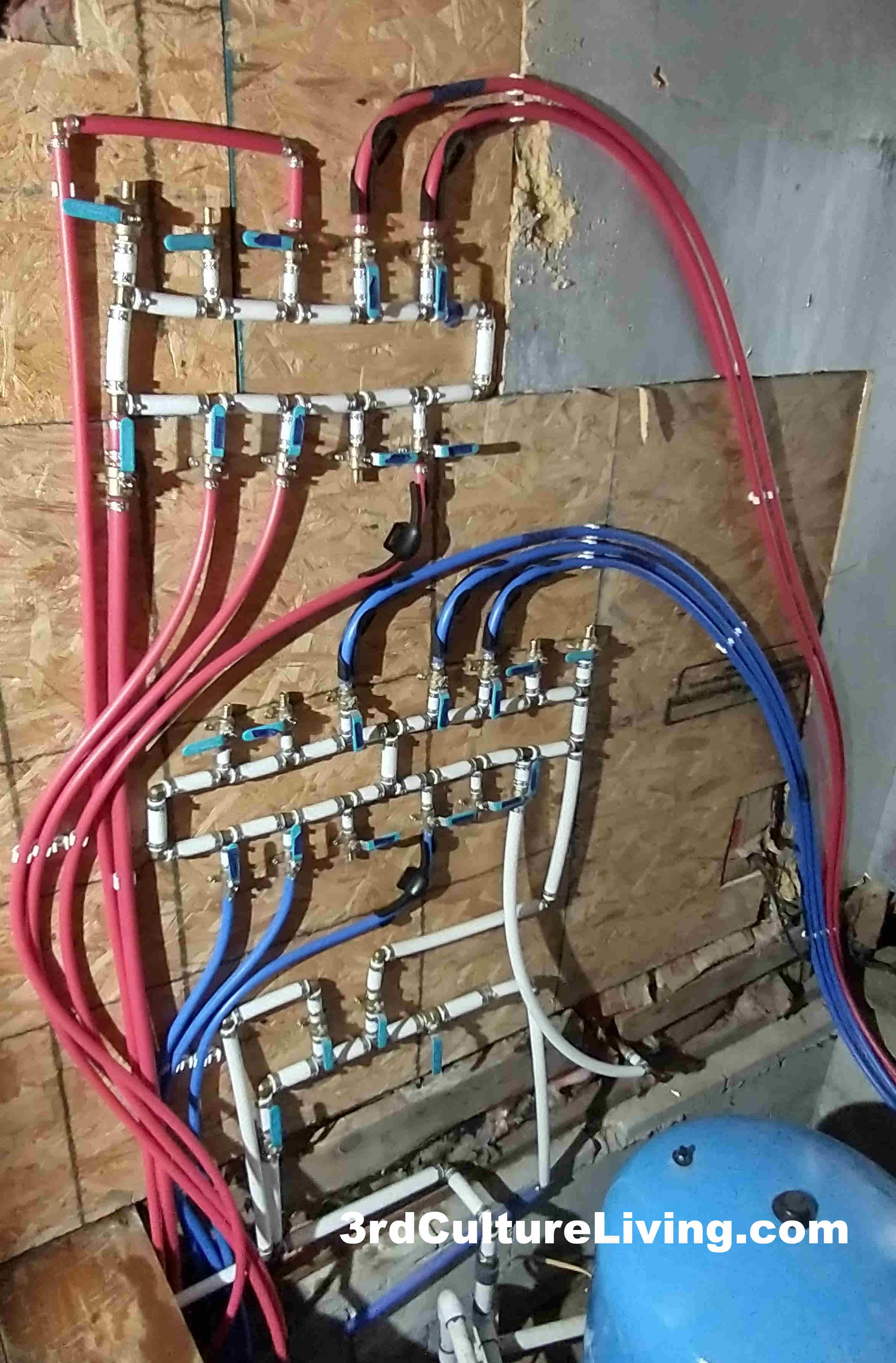
1. Cut Our Water Lines – While this may seem a bit drastic, after our lines froze last year I had a plan. Now I get to test how it works! :o) When we moved in we needed to replace all of the water lines through the house and we went with PEX and built a “Water Circuit Breaker” that allows me to shut off every line individually. True to what they say, even when PEX freezes, it expands and doesn’t break, which was a relief last year when most of our lines froze. That being said, break or not you still don’t have water. So, this year before the cold came, I cut the water lines at a low point, put in a T joint going down to a shutoff valve. I can now turn off each line, put a bucket under that valve, and open it to drain the line. I’ve been doing this on cold days with our laundry and kitchen sink (which were the worst for freezing up last year) and it’s been working great. It’s a hassle that I’ll only need to do a few times each year, so works well for me compared to more complex or expensive automatic solutions. I also don’t need to worry about the electricity going out and electric heaters not heating the lines.
- Update 2025/02/21 – The drain sort of worked. We still had a frozen line where there was a dip in a line, but that was fairly easy to hit with a hair drier instead of having an entire frozen water line.

2. Prepare for our Heaters to Shut Down when it Gets Cold – Yep, one of the fun twists of mini-splits with a heat pump is that it shuts down when the temperature gets too cold. A heat pump works by pulling heat out of the outside air and pumping it into the house. This works great when the temps are cool, but above freezing and still works reasonably well even down into the teens, and possibly even into single digits, but at -10 there isn’t much heat to pull from the air and I am fully expecting that (like last year), our primary heaters will shut down when it gets cold. Last year we weren’t really ready for that and, with our new baby bundled up, we were really glad that we had two Mr. Buddy Portable Propane Heaters. These are meant for camping, etc., and were lifesavers for us. This year we are more prepared. We fixed the large pellet heater (which we learned the hard way didn’t work last year). This will heat a portion of the house. We also have space heaters spread throughout the house. And we still have those portable propane heaters for really warming up the area where we are working, eating, etc.
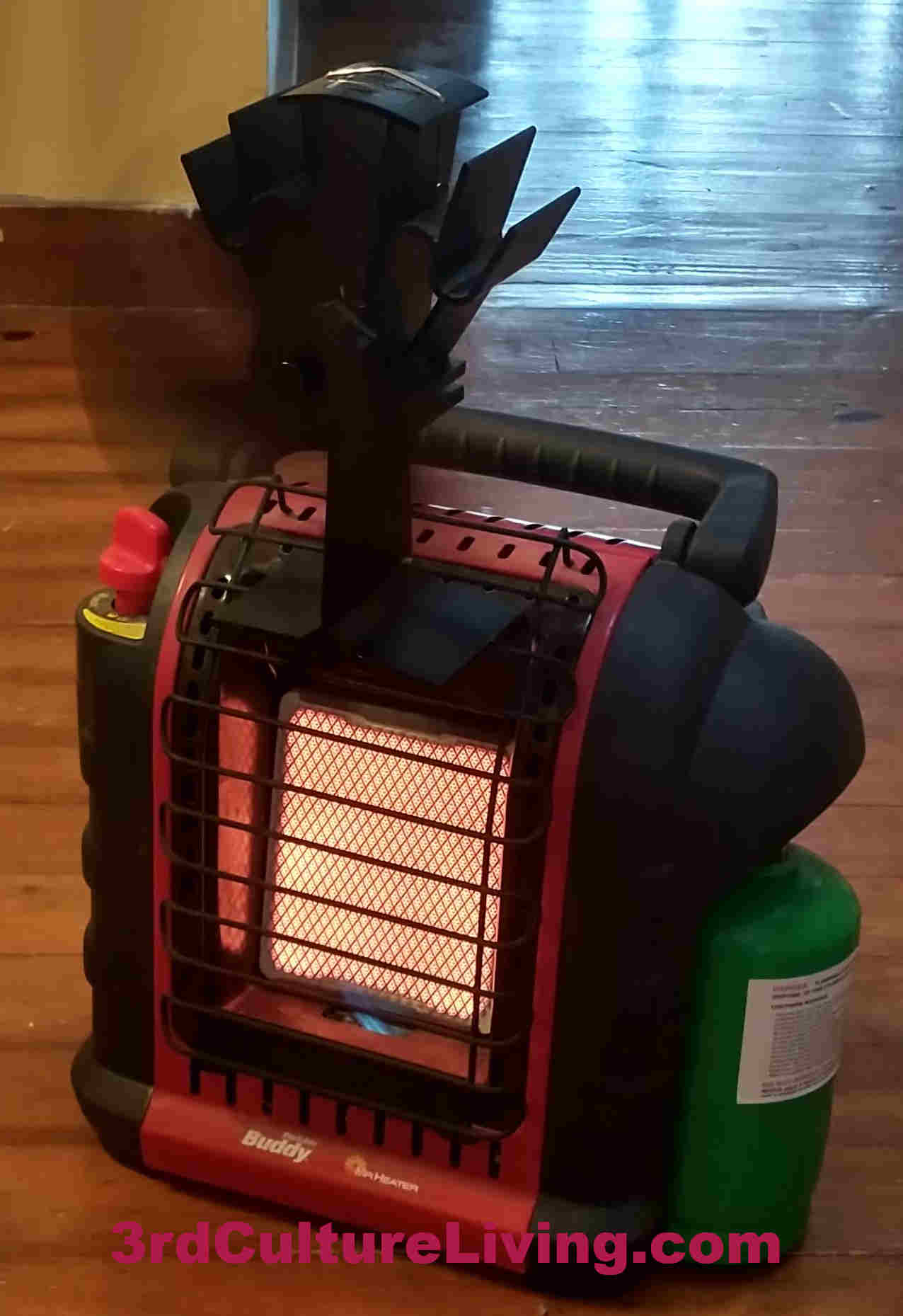
(Nearly useless without the fan)
- As a note: I have no idea how a heat pump works. There are times that it is quite cold and the heat pump still pulls the heat out of the air and into the house. That is amazing to me. I was recently told that on very cold days sometimes people will build a bonfire outside of their house not far from the heat pump. This creates heat that the heat pump can then pull into the house. Maybe I should move our burn barrel and wait until the cold days to burn our burnable trash. Hmm, something to consider.
- For the Portable Propane Heaters, I am grateful for refillable 1 pound canisters. Instead of the $5-6 for each canister, we are refilling off of a 20 pound tank for about $1. I have three refillable canisters for each heater so that even if we run them all night (which we did last year, but not this year as we are more prepared), I won’t have to go outside to refill them in the middle of the night.
3. Garden Starts from the Greenhouse to the House – While the greenhouse is wonderful during the day, it gets cold at night and we were losing our seedlings even with a heater on. We moved everything to the house and will move them back after the deep freeze.

(in a bathroom we needed to gut)
3. Wind Blocks for the Goat Shelters – Our goat shelters are made from hooking shipping pallets together and adding a roof. This makes for a very drafty enclosure to get out of the rain, etc. For the one shelter we basically wrapped it in a tarp. The other shelter is new and was quickly built for our buck who we recently added to the mix. We didn’t have time or the tarp to build walls and Elyse thought of a great idea. We recently picked up 4 free IBC totes that are filthy and needing to be cleaned on the inside (when the weather is warmer), but that are clean on the outside. We moved them into the goat fence and put them all around the outside of the shelter. This created a great wind block.

We put a tarp over it for extra winter wind block.
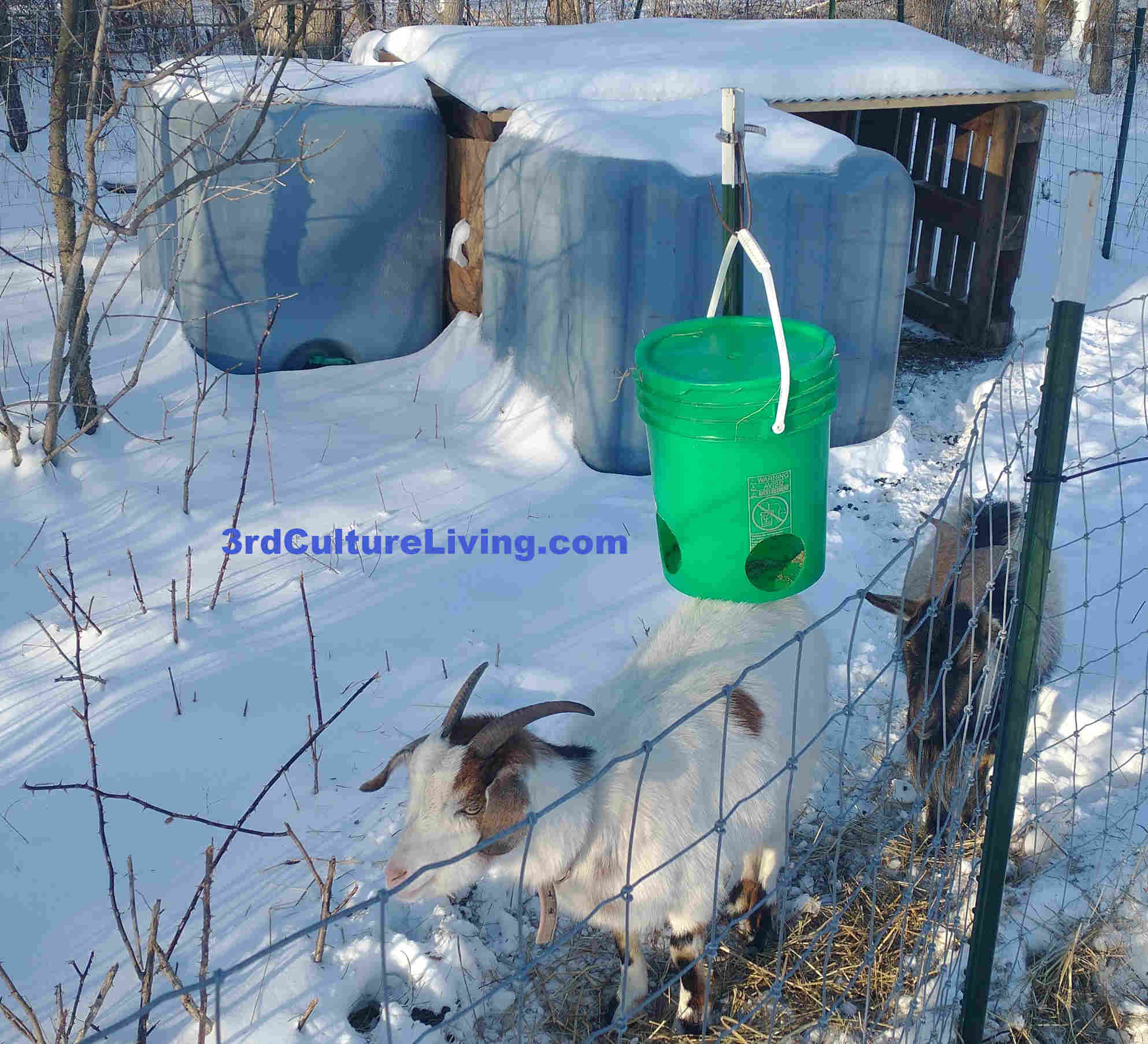
4. Wind Block for the Chickens – We recently built a mobile field shelter. I have it out to test how it will handle wind and snow… did we actually build a giant, very heavy, kite? Before the deep freeze, I moved it right in front of the open door to the chicken coop. This not only blocks the wind (I hope), but also gives them a place to get out, and for me to spread their feed, without being out in the full wind, cold, and snow.


5. Wind Block for the Rabbits – Like the other animals, the rabbits got a wind block by having their cages covered by a large tarp (an old billboard sign). We pull it down to cover everything at night and up during the day.

6. Extra Feed and Bedding – All the animals are on extra rations these days. We are careful to make sure that the animals have plenty of feed to keep their body temp up. We also put down straw or lower quality hay in the various shelters for them to snuggle down.
7. Heat Lamp for Mother Hen – One of our hens loves to go broody and sit on eggs. This is a wonderful blessing to have chicks, but she isn’t very discerning about timing. The warm winter temperatures in Missouri keep confusing her and she goes broody when very cold days are still ahead. Earlier this winter we tried moving her to the greenhouse for wind block and warmer daytime temperatures, and put a heat lamp over her. This agitated her and she quit sitting on the eggs. This time we just put the heat lamp over her. We’ll see how it goes and if the eggs freeze. One thing we have noticed is that other hens have been coming to sit with her and help keep the eggs warm. I’m not sure if this is to really be helpful, or if they just want to cuddle under the heat lamp, but either way it seems that it would be helpful. We’ll see how it goes. Hopefully we’ll have baby chicks after the freeze.
8. Metal, Sloping Water Bowls – For many of our animals, especially the goats, a 3 gallon plastic bucket works great for water. However, with the freezing temperatures, it was very slow and difficult to get the ice block out each time we gave them new water. Switching to metal bowls with sloping walls, though much smaller, made it easier to dump the ice and add new water. We need to add water much more often, sometimes just minutes after adding the first time, but this has been much easier to give them water with the freezing temperatures.

- We do have water heaters that can keep water from freezing, but with the small amounts for the rabbits, etc. it was easier to just make regular rounds to check on water and take care of the animals as needed. If we were dealing with larger 100+ gallon stock tanks, a water heater would definitely be helpful.
- Geothermal water heater! – In the future, once we have a better grasp on our set up and routines, there is a way to easily keep water from freezing using geothermal heat! It basically comes down to digging a 3-4 foot hole and putting the water container directly over it. The heat from below the frost line will come up and keep the water from freezing. (There’s a bit more to it, but that’s the gist of the idea.)
While I can’t say that waking up and heading out into the cold to take care of the animals is my favorite thing, there is a certain joy in it. It is a blessing to know that I am taking care of these animals, that this is really helping them and keeping them alive. It also gives a meaningful start to the day. Perhaps my favorite part is doing it with one of our sons who has taken over the ducks. For him this means carrying water and food down from the house to make sure that they have what they need. He has been dedicated, even when he was a bit sick. It has been nice being able to connect with him as we take care of the animals together.
There are many other blessings to the cold, reducing insect populations, helping to break down the wood chips on our gardens, helping some plants to grow sweeter, etc. God created cold for a reason, and while my fingers may not always like it, it too is a blessing.
Update 2025/02/21 – We are now past the cold with temperatures rising. All the animals (and people) are doing well. We had a friend lose some animals in the cold and we are grateful that ours did well and didn’t seemed bothered much (though everyone stayed closer to their shelters than they normally would have).

 3rd Culture Living
You’ve really done an incredible job preparing for the cold! The water line fix and the “Water Circuit Breaker” are such smart solutions and having backup heaters ready shows how much you’ve learned from last year. The wind blocks for the goats, chickens, and rabbits were really clever too—it’s awesome how you adapted so quickly. And I love that your son has taken on the ducks—that’s such a sweet connection and a great learning experience for him. You should feel so proud of how well you’ve handled everything. It’s clear all your hard work paid off, and I’m so glad everyone came through the cold safe and sound! God Bless you and your Family!!!!!!!
LikeLike
It has certainly been a wonderful opportunity to learn and grow. What are some things God has been teaching you recently?
LikeLike